Best way to learn about AI in 2026
Key facts: Best way to learn about AI in 2026
Pick a learning goal, establish the prerequisites and use a small project to check what you can explain and do independently.
What is the fastest way to start learning AI in 2026?
Begin with Python fundamentals, then take a structured ML/LLM intro course while building weekly mini-projects to publish.
Do I need a degree to get an AI job in Australia?
Not necessarily; employers accept strong portfolios, micro-credentials, and certifications plus evidence of responsible data use.
Which AI tools should beginners focus on this year?
Start with Python, scikit-learn, PyTorch, and hosted notebooks; add RAG patterns with vector databases for applied LLM work.

Read this if you are:
Founders & Teams
For leaders validating ideas, seeking funding, or managing teams.
Students & Switchers
For those building portfolios, learning new skills, or changing careers.
Community Builders
For workshop facilitators, mentors, and ecosystem supporters.
Best way to learn about AI in 2026 helps Australian founders and teams avoid common pitfalls. This guide is designed to be actionable, evidence-based, and tailored to the 2026 landscape.
What is Best way to learn about AI in 2026?
Learning AI in 2026 means combining three threads: (1) computational thinking and Python fluency, (2) applied machine learning and large language model (LLM) patterns such as retrieval-augmented generation (RAG), and (3) responsible practice aligned with the Australian Privacy Principles (APPs) and emerging AI safety guidance. It is less about memorising theory and more about shipping small, verifiable projects that demonstrate you can reason about data, evaluate models, and communicate risks.
In Australia, employers increasingly value demonstrable skills over titles. Whether you are in Brisbane, Sydney, or remote, the fastest path pairs online coursework with local communities—meetups, hackathons, and open-source contributions—so you can validate your skills with feedback.
Why it matters in 2026

Generative AI is now embedded in productivity stacks, customer support, and analytics. Ignoring it risks slower delivery, higher costs, and compliance gaps. Acting now matters because Australian organisations are formalising AI governance in procurement and vendor risk assessments. Being able to explain data lineage, consent, and evaluation metrics is becoming table stakes for roles across product, engineering, and operations.
The 2026 hiring market rewards candidates who can move from prototype to production responsibly. If you can show model comparisons (e.g., perplexity vs. cost), basic prompt evaluation, and a privacy-first approach, you will stand out without needing a decade of experience.
Step-by-Step Guide

Step 1: Preparation
Cover the essentials quickly: Python, Git, and data handling. Use the Australian Bureau of Statistics (ABS) open datasets for practice to stay within local data norms. Learn the math you need just-in-time—vectors, matrices, gradients—via concise resources like 3Blue1Brown. Set up a reproducible environment (Conda or uv) and a hosted notebook (Colab or Paperspace) to avoid local GPU blockers.
Choose one credential to anchor your learning—an AWS ML Specialty practice path or a university micro-credential—so you have a clear syllabus and deadlines. Bookmark OAIC guidance to ensure any personal data you touch is de-identified or synthetic.
Step 2: Execution
Build three to four projects that reflect real Australian problems: demand forecasting for a local retailer using Prophet, a RAG chatbot over public policy PDFs, or a toxicity filter for community forums using open models. For each project, document dataset sources, evaluation metrics (accuracy, F1, latency, cost per 1k tokens), and privacy controls. Push code to GitHub, add a short Loom walkthrough, and invite feedback from local meetups.
Practice responsible deployment: use feature flags, capture model and prompt versions, and add red-teaming checklists. When using LLMs, compare at least two providers on cost and accuracy; note where models struggle with Australian slang or location names, and add guardrails.
Step 3: Review
Run a monthly retrospective: what shipped, what was measured, and what broke. Update your portfolio to highlight lessons, not just successes. Map skills to roles—data analyst with LLM augmentation, ML engineer, or AI product manager—and identify the next credential or project to close the gap. Ask mentors for targeted feedback on code quality, model evaluation, and communication clarity.
Finally, rehearse concise storytelling: explain one project in 90 seconds, including the problem, approach, metrics, cost, and risks. This is increasingly what Australian hiring managers expect in 2026 screenings.
Conclusion
The best way to learn about AI in 2026 is to ship small, responsible projects, document your decisions, and stay anchored to Australian privacy and governance expectations. With steady practice and community feedback, you can reach hire-ready confidence without pausing your career for a full degree.
Your Next Steps
- 1Set up your learning environment (Python, Git, hosted notebook) this week.
- 2Complete one introductory ML course module and ship a mini-project to GitHub.
- 3Join a local AI meetup or online community for feedback and accountability.
About the Author
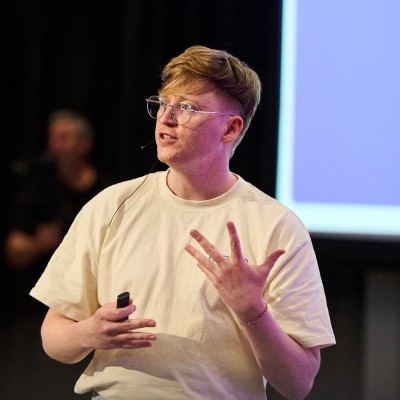
Dr Sam Donegan
Medical Doctor, AI Startup Founder & Lead Editor
Sam leads the MLAI editorial team, combining deep research in machine learning with practical guidance for Australian teams adopting AI responsibly.
Frequently Asked Questions
What is the quickest way to start learning AI in Australia?
Do I need a maths degree to work in AI?
Which Australian credentials are recognised by employers?
How do I learn AI responsibly under Australian privacy laws?
What tools should beginners prioritise in 2026?
How long does it take to be job-ready for an AI role?
Disclaimer: This article provides general information and is not legal or technical advice. For official guidelines on the safe and responsible use of AI, please refer to the Australian Government’s Guidance for AI Adoption →

Join our upcoming events
Connect with the AI & ML community at our next gatherings.
Check availability, any waitlist and registration requirements on the organiser’s page. A listing does not reserve a place.
Founder Content Day
View event details (opens in a new tab)
AI Engineer Night Melbourne #2
View event details (opens in a new tab)
STRANGER BUILDS l $10k USD CASH PRIZES I Halloween Hackathon (MELBOURNE)
View event details (opens in a new tab)