How does a venture capital firm work (2026)
Key facts: How does a venture capital firm work
Follow how a venture fund raises, invests and returns capital, and distinguish the fund’s economics from the finances of an individual startup.
How do VC firms make money?
Management fees (~2% p.a.) and carried interest (often 20%) after LP capital is returned.
What is a VC fund’s structure?
LPs commit capital to a fund run by GPs; it invests over 3–5 years with a 10–12 year fund life.
What do VCs look for in AI startups?
Team, market, traction, defensibility—plus data advantage, distribution, and responsible AI.

How does a venture capital firm work
In simple terms: investors (LPs) commit money to a fund, general partners (GPs) run the fund, and that capital is invested into a small number of high-potential startups. In Australia (2026), VC is a focused tool for AI teams pursuing outsized growth; it comes with expectations on speed, scale, and governance.
Inside a VC firm: LPs, GPs, and the fund economics ("2 and 20")
A venture capital firm typically manages one or more closed-end funds. Limited partners (LPs)—such as super funds, family offices, and high-net-worth investors—commit capital. General partners (GPs) source deals, invest, and manage the portfolio. The firm usually earns a management fee (often around 2% per year on committed capital) and a performance fee called carry (commonly 20% of profits after returning LP capital). Returns are highly skewed: a few outliers tend to drive most of a fund’s performance.
💡Know your investor’s fund math
How decisions get made: sourcing → screening → diligence → investment committee

Most firms run a pipeline: (1) Sourcing via networks, inbound, and theses; (2) Screening for fit (stage, sector, cheque size); (3) Diligence on team, product, market, traction, references, legal; (4) Investment Committee (IC) to approve terms; and (5) Closing and wiring funds. For AI startups, diligence often includes model provenance, data rights, eval quality, governance, and customer validation.
The VC fund life cycle: raise, invest, support, exit (10–12 years)

A typical fund spends its first 1–2 years raising, then invests initial cheques over ~3–5 years while reserving capital for follow-ons. The final years focus on scaling portfolio companies and realising outcomes (secondary sales, M&A, IPO). Understanding this cadence helps you time outreach and anticipate follow-on behaviour.
What VCs look for — especially in AI startups
Common lenses include: team (insight, speed, ethics), market (size, growth, urgency), product (clear wedge and user love), traction (paying users or strong usage), unit economics, and path to a meaningful outcome. For AI teams, investors also scrutinise your data advantage, model and infra choices, evals, and distribution.
AI-specific signals that help
• Credible data rights and privacy posture (as at 2026, customer and regulator expectations are rising). • Robust internal evals tied to customer outcomes. • Moats beyond model access (e.g., proprietary data, workflow lock‑in, or unique distribution). • Early revenue quality (expansion, retention) versus vanity metrics.
Rounds, instruments, and terms in Australia
Australian rounds generally mirror global norms but with local nuances. Pre‑seed/Seed often use SAFEs or convertible notes (valuation cap/discount), while Series A+ are usually priced equity. Term sheets commonly include pro‑rata rights and a 1× non‑participating liquidation preference in Australia; specifics vary by deal.
Instruments (founder quick scan)
• SAFE: Simple agreement for future equity. No interest or maturity, converts later. • Convertible note: Debt that converts to equity later with interest/maturity. • Priced equity: Sets a valuation now; governance ramps up (board, reporting).
As at 2026, AU seed rounds remain highly context‑specific. Founders should model dilution across scenarios and align on runway (typically 18–24 months) and milestones.
The Australian landscape: programs, players, and norms
Australia supports early‑stage investing through frameworks such as ESVCLP and VCLP (see official guidance), alongside the R&D Tax Incentive. Local funds span generalist and deep‑tech; angel syndicates and micro‑funds play a growing role at pre‑seed. International funds increasingly participate remotely when the problem and traction are compelling. Always confirm program details from official sources.
Getting a first meeting: materials, outreach, and proof
Prepare a tight 10–12 slide deck, a concise memo, and a lightweight data room (cap table, product demo, key metrics, customer references). For outreach, warm intros help but thoughtful cold emails with clear traction are read. Lead with customer outcomes, why now, and a crisp ask (round size, use of funds, milestones).
Practical steps
- 1Map investor–company fit: stage, cheque size, sector thesis, and fund age.
- 2Build an evidence pack: product demo, early customer proof, metrics, and data rights.
- 3Create a targeted list and run a 2–3 week, well‑paced process to keep momentum.
Who this helps
Founders & Teams
For leaders validating AI ideas, seeking funding, or planning runway.
Students & Switchers
For those building portfolios, learning venture basics, or exploring AI paths.
Community Builders
For mentors and organisers supporting early-stage AI teams in Australia.
More from the MLAI article library
Browse practical guides and explainers on AI, startups, and careers, written by the MLAI community for Australian startups and teams.
Browse all articlesChoose your capital strategy, not just a round
VC can be powerful when your goal is speed to a large outcome. It is not the only path: angels, revenue, grants, and partnerships may better fit some AI teams. Decide based on your milestones, customer cycles, and resilience to market swings. If you do pursue VC, be explicit about runway, evidence, and what success looks like between now and the next raise.
Your Next Steps
- 1Map who supplies capital, who makes investment decisions and how returns reach investors.
- 2Draft your round plan: runway, milestones, and target investor list.
- 3Run a focused outreach window and refine based on feedback.
Need help with How does a venture capital firm work?
MLAI is a not-for-profit community empowering the Australian AI community. Share your goals and we'll point you to helpful resources and connections.
Join the MLAI communityFriendly, community-first contact — no hard sell.
Disclaimer: This article provides general information and is not legal or technical advice. For official guidelines on the safe and responsible use of AI, please refer to the Australian Government’s Guidance for AI Adoption →
References
[1]What Is Venture Capital? Definition, Pros, Cons, and How It Works
Investopedia • General global explainer of VC definitions, mechanics, and trade-offs.
Guide[2]How venture capital firms work and what they look for
Stripe • Founder-oriented guidance on VC processes and evaluation criteria.
Industry[3]Early Stage Venture Capital Limited Partnerships (ESVCLP)
Australian Government (business.gov.au) • Program overview and official information for ESVCLP.
Government
Show all 6 references (3 more)Show less
[4]Venture Capital Limited Partnerships (VCLP)
Australian Government (business.gov.au) • Program overview and official information for VCLP.
Government[5]Australian Startup Funding Reports
Cut Through Venture • Independent analysis of Australian startup funding trends (check latest report).
Analysis[6]Standard form SAFEs
Y Combinator • Official SAFE templates and notes. Commonly referenced globally.
Guide
About the Author
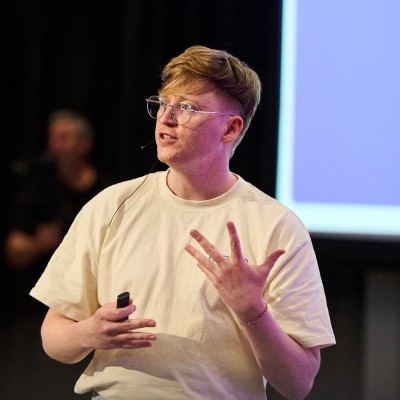
Dr Sam Donegan
Medical Doctor, AI Startup Founder & Lead Editor
Sam leads the MLAI editorial team, combining deep research in machine learning with practical guidance for Australian teams adopting AI responsibly.
Disclaimer: This article provides general information and is not legal or technical advice. For official guidelines on the safe and responsible use of AI, please refer to the Australian Government’s Guidance for AI Adoption →

Join our upcoming events
Connect with the AI & ML community at our next gatherings.