Learn AI Melbourne
Key facts: Learn AI Melbourne
Choose a learning route that fits your starting skills, time and goals. Check the provider’s current prerequisites, delivery mode and fees before enrolling.
Where can I study AI in Melbourne?
Universities and TAFE (e.g., Victoria University, Holmesglen) plus short courses and bootcamps; confirm current intakes on provider sites.
How long do AI courses take?
Short courses: weeks; grad certs: 6–12 months part‑time; bachelor’s degrees: 3+ years. Timelines vary by provider.
Do I need coding or maths first?
Beginner short courses often require none; university programs usually expect Python and maths (algebra, probability).

Learn AI Melbourne – A practical overview for anyone in Melbourne deciding between university, TAFE and short courses, plus where to meet people and build real projects. Wherever you start, aim to produce a small, public piece of work within your first month.
Who is this guide for?
Founders & Teams
Make smart choices about AI upskilling and build portfolio demos that matter.
Students & Switchers
Map a path from beginner to job-ready with clear, achievable milestones.
Community Builders
Run workshops, study groups, or hack nights that help people learn together.
Where to study AI in Melbourne (universities, TAFE, and short courses)
Melbourne learners typically choose from three routes: university programs (from graduate certificates to degrees), TAFE/vocational training, and short courses/bootcamps. University options suit those seeking rigorous foundations and recognised credentials. TAFE and vocational routes emphasise practical job skills. Short courses are fastest to start and can help you test interest or upskill quickly. As at January 2026, providers such as Victoria University (graduate certificate) and Holmesglen (TAFE/short courses) list AI-related options—confirm details directly on each provider’s site.
Typical entry requirements (maths, coding, and work experience)

Entry varies by level. Graduate certificates often expect prior study or industry experience, basic programming (commonly Python), and comfort with maths (linear algebra, probability). TAFE and many short courses allow beginners, sometimes offering bridging content. If you’re new to programming, start with a short Python primer and a quick refresher on algebra and statistics before enrolling in heavier AI subjects.
On‑campus vs online: how Melbourne providers deliver AI courses

Most providers now support online, on‑campus, or hybrid delivery. Online study offers flexibility; on‑campus time gives access to labs, peers, and face‑to‑face support. Check the latest course page for campus locations, mode, and timetables. If you work full‑time, choose asynchronous options or evening classes; if you learn best with peers, prioritise in‑person sessions.
How long it takes and what it costs (2026 snapshot)
Timelines: short courses (weeks to a few months); graduate certificates (6–12 months part‑time); bachelor’s degrees (3+ years). Fees vary widely—short courses range from affordable intros to premium intensives; vocational and university programs are typically in the thousands per term or unit. Always verify current fees, intake dates, and any available support (e.g., eligibility for government loan schemes) on the provider’s site.
Choosing a course: a simple decision framework
First, define what you need in the next 6–12 months: a recognised credential, faster upskilling, or a career switch. Second, assess your baseline (maths, Python, data skills). Third, shortlist 2–3 providers that match your mode, budget, and timeline. Finally, compare syllabi and outcomes against a small project you want to build.
Step-by-step actions
- 1Define your immediate goal (credential, upskilling, or switch).
- 2Check entry requirements and delivery mode for 2–3 Melbourne providers.
- 3Start a small project (e.g., a simple model or AI-enabled app) and iterate weekly.
Learn beyond the classroom: meetups, hack nights, and community
Melbourne’s AI community is active and welcoming. Join meetups, hack nights, and study groups to learn faster and find collaborators. MLAI is a not‑for‑profit community supporting Australian AI practitioners and learners—if you’re keen to connect with locals, get in touch.
More from the MLAI article library
Browse practical guides and explainers on AI, startups, and careers, written by the MLAI community for Australian startups and teams.
Browse all articlesBuild a portfolio that Melbourne employers recognise
Focus on small, real problems. Examples: a demand‑forecasting notebook for a local dataset, a retrieval‑augmented chatbot for public documents, or a computer‑vision demo on open images. Publish your code, add a README with metrics and limits, and write a short reflection. Two or three tidy, honest projects beat a long list of half‑finished experiments.
Next steps
Pick a learning path, start a tiny project this week, and plug into the community. For a broader view of the local landscape, explore our Australian AI ecosystem content and stay close to events and peers.
Tip: you can also browse our pillar overview at Australian AI ecosystem for related guides.
Sources & further reading
[1]Artificial Intelligence Courses in Melbourne
Holmesglen Institute • Overview of AI-related study options and information from Holmesglen.
Guide[2]Graduate Certificate in Artificial Intelligence
Victoria University • Course structure, entry requirements and delivery details for VU’s graduate certificate.
Guide
Disclaimer: This article provides general information and is not legal or technical advice. For official guidelines on the safe and responsible use of AI, please refer to the Australian Government’s Guidance for AI Adoption →
Need help with Learn AI Melbourne?
MLAI is a not‑for‑profit community empowering the Australian AI community. Reach out for practical pointers to local learning paths.
Get recommendationsFriendly, community‑first guidance.
About the Author
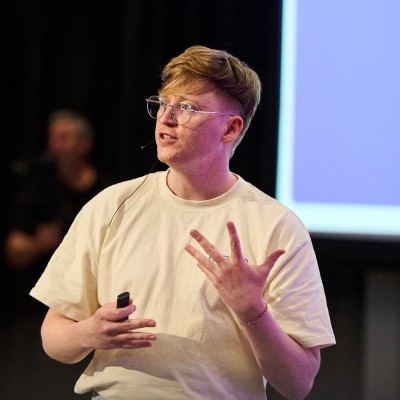
Dr Sam Donegan
Medical Doctor, AI Startup Founder & Lead Editor
Sam leads the MLAI editorial team, combining deep research in machine learning with practical guidance for Australian teams adopting AI responsibly.
Frequently Asked Questions
Where can I learn AI in Melbourne?
Do I need to know Python before I start?
How long do AI courses take?
Is online study available?
How much does it cost to learn AI?
How do I get hands-on experience?
Disclaimer: This article provides general information and is not legal or technical advice. For official guidelines on the safe and responsible use of AI, please refer to the Australian Government’s Guidance for AI Adoption →

Join our upcoming events
Connect with the AI & ML community at our next gatherings.