How to Start a Company Around an AI Idea From Prototype to Customers
Key facts: How to Start a Company Around an AI Idea From Prototype to Customers
A practical guide to turning an AI prototype into a testable offer, running pilots, setting up safely in Australia, and winning early customers.
What turns an AI idea into a real company?
A real company starts with a specific customer problem, a defined buyer, and a measurable outcome. A working demo alone does not show demand, budget, or willingness to change.
How should founders shape the first offer?
The first offer should cover one use case, one workflow, and clear limits on data, users, integrations, and support. This makes early trials easier to deliver and easier for customers to assess.
Why do pilots matter before scaling?
Pilots help founders test usage, business value, and delivery friction before investing in a broader rollout. Time-bound pilots with simple KPIs give better evidence for pricing, roadmap, and sales decisions.
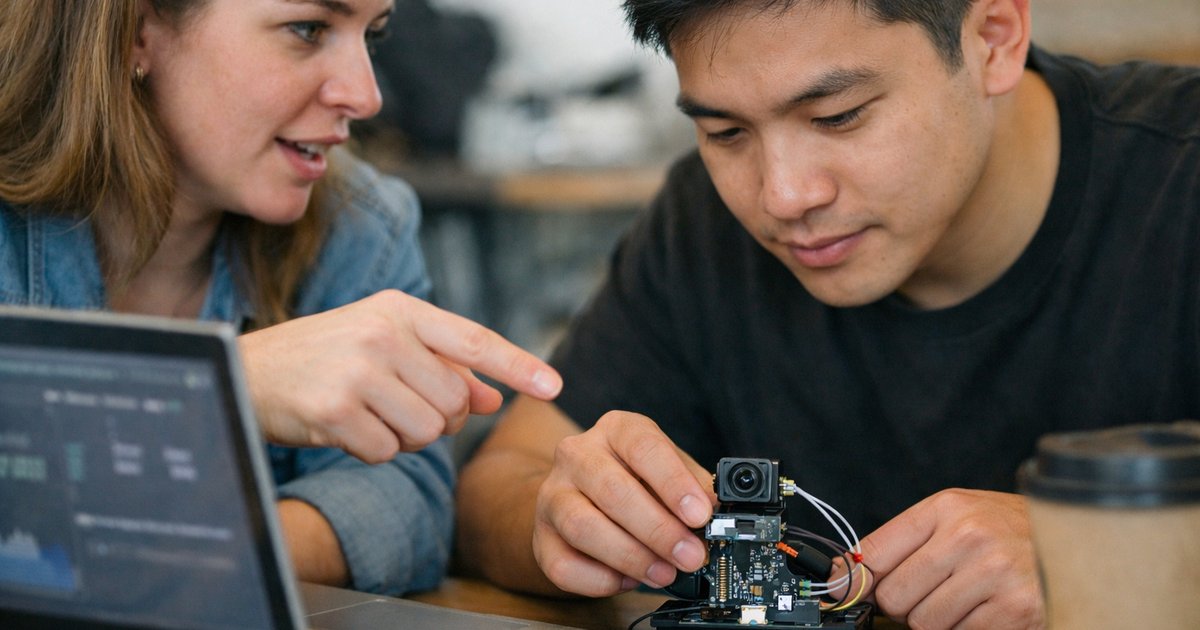
How to Start a Company Around an AI Idea From Prototype to Customers — Many AI startups stall because they confuse a clever prototype with a real business. A demo can show that a model works, but that does not prove that a customer has a clear problem, a budget, or a reason to switch from what they do now. The stronger starting point is usually a narrow pain point for a defined user, then a small pilot that tests whether the solution creates a useful result. This matters because early time and money are easy to waste on features, platforms, and technical polish that nobody has asked for.
A safer path is to start small, test early, and judge progress by outcomes instead of novelty. The first signs of traction are usually practical: user feedback, measurable KPIs, and evidence that the product improves a task or decision in a way people care about. It moves from prototype, to validation, to business setup, and then to winning first customers. The goal is not to build the broadest AI product first. The goal is to prove that a specific problem is worth solving, then grow from there.
Who is this guide for?
Founders & Builders
For operators validating demand, pitching a vision, and moving before momentum stalls.
Students & Switchers
For readers learning how strong technical partners evaluate traction, skills, and fit.
Community Builders
For connectors, mentors, and organisers helping founders meet collaborators in the right rooms.
Start with a narrow problem and a clear buyer
A strong AI company usually starts with one narrow problem, not a broad idea like "AI for marketing" or "AI for healthcare." The safer starting point is a specific workflow where people already feel friction, such as a repetitive task, a slow manual review step, or a decision that often creates delays or errors. The goal is to pick a pain point that is easy to describe, easy to test, and important enough that someone wants it fixed now. This keeps the first prototype small and helps you learn quickly from real use instead of building a large system around assumptions.
Once the problem is clear, define the buyer path just as clearly. Ask three separate questions: who feels the pain day to day, who will use the product, and who can approve the budget. In some early products, these may be the same person, but often they are not. A useful first wedge is a use case that happens often, costs time or money when done badly, and has enough urgency that a team will try a new solution. Before building further, set a simple success measure tied to the workflow, such as time saved per task, fewer mistakes, or better conversion on a defined step. If you cannot explain the result in plain business terms, the idea is probably still too broad.
- Separate the user, the problem owner, and the budget approver.
- Use simple proof points like time saved, error reduction, or improvement in a specific conversion step.

Turn the prototype into a testable minimum offer
A prototype is useful for showing that your idea can work, but early customers usually need something more concrete than a demo. The next step is to turn it into a minimum offer: a small, testable version of the product built around one real problem and one clear result. The core idea is to start small, focus on a specific pain point, and test with users before expanding. That keeps you from spending too much time building features people may not want.
Pick one use case, define the workflow the customer will follow, and make the output visible enough that they can judge whether it helps. For an AI product, the offer does not need to be fully automated from day one. This fits the pilot approach: use a basic version, measure whether it solves the problem, and improve it through short feedback loops.
Set limits on who can use it, what data is included, which integrations are in scope, and how much support you will provide during the trial. These boundaries make the first version easier to deliver and easier for the customer to understand. They also help you separate what is ready now from what still needs work, which is important when moving from prototype testing toward a repeatable product.
A simple, well-scoped offer with explicit expectations is usually more useful than a broad promise backed by an unfinished product.

Practical next steps
- 1Separate the user, the problem owner, and the budget approver.
- 2Use simple proof points like time saved, error reduction, or improvement in a specific conversion step.
Validate with pilots before you scale the product
A pilot is a safer way to test an AI product than a full launch. The goal is not to prove that the whole company is finished. It is to check whether a real customer problem exists, whether your prototype can help, and whether people will use it in practice. That lines up with basic product development advice: start with a viable idea, build a basic version, test it early, and use feedback to improve it before you invest more time and money.
For an AI founder, a good pilot should be narrow and time-bound. Pick one specific pain point, agree on a clear start and end date, and define a small set of KPIs before work begins. That keeps the project focused and makes the decision at the end easier. Instead of asking, "Did people like it?" you can ask, "Did it reduce manual work, improve speed, or solve the problem well enough to continue?"
What to measure during a pilot
The most useful pilot feedback usually comes from three areas. First, watch user behaviour. Are people actually using the tool, or are they falling back to their old process? Second, look for business value. Even in a small trial, you should be able to see whether the product helps with an important job. Third, note operational friction. Early testing is the right time to find problems in setup, workflow, handoff, or support.
If the product only works with heavy founder involvement, unclear inputs, or manual fixes, that is still valuable learning.
How pilot results shape the next move
At the end of the pilot, use the evidence to make a simple decision: refine, repeat, or move forward. If usage is weak, your positioning may be off or the problem may not be urgent enough. If users get value but setup is messy, product priorities may need to shift toward reliability and workflow fit. If the results are strong, you have better grounds to invest in production planning and go-to-market work.
That is a stronger base for pricing and roadmap choices than building for scale too early.
Build the company foundations early enough to sell safely
As an AI idea moves from prototype to real customer use, the company setup needs to catch up. In Australia, that means thinking about the legal structure of the venture and the rules that apply before sales widen. It also makes it easier to explain what the business is actually offering, who is responsible for delivery, and how risks will be handled.
This is also the stage to make ownership and data questions explicit. Customers will want to know what data the product uses, how that data is handled, and who owns the outputs, code, prompts, or other materials created in the service. Founders do not need a huge legal stack on day one, but they do need clear boundaries around privacy, intellectual property, and acceptable use before broader rollout.
Product development guidance from business.gov.au stresses moving from prototype and testing into production planning. For an AI startup, that means checking whether onboarding, support, monitoring, and issue handling match the promise being sold.
Customers do not need every technical detail, but they do need to understand what the tool does, where it may be wrong, and what happens if something goes wrong. That combination makes the business easier to buy from and easier to improve as real customer use expands.
- Support, onboarding, delivery, and production readiness.
- What the AI does, its limits, and how issues will be managed.

How to win your first customers and learn from each sale
Your first customers usually come from a narrow use case, not a broad AI story. Start with a segment where the pain is clear, frequent, and expensive enough to justify change. In outreach and early calls, talk about the workflow problem, the time or cost being lost, and the measurable result your product can improve. That keeps the conversation grounded in business value instead of model features. A small pilot with simple success metrics is often the easiest way to get a first yes, because it lowers risk for the buyer and gives you a clear feedback loop.
That gives you material for case examples, testimonials, sharper messaging, and product decisions. That repeatable first use case is a better foundation for growth than an ambitious product vision with no clear buying path.
Record what each customer agreed to try, what they actually used and what happened next. Keep a demonstration, an unpaid trial and a paid commitment distinct when deciding your next step.

More from the MLAI article library
Browse practical guides and explainers on AI, startups, and careers, written by the MLAI community for Australian startups and teams.
Browse all articlesSources & further reading
[1]A practical guide to getting started with Business AI - UNSW BusinessThink
businessthink.unsw.edu.au • businessthink.unsw.edu.au
Guide[2]The AI Prototype-to-Production Checklist
blog.tobiaszwingmann.com • blog.tobiaszwingmann.com
Guide[3]From Idea to Impact: How to Launch Your First AI Project | Artificial Intelligence | MyMobileLyfe | AI Consulting and Digital Marketing
mymobilelyfe.com • mymobilelyfe.com
Guide
Show all 10 references (7 more)Show less
[4]Develop a new product | business.gov.au
business.gov.au • business.gov.au
Guide[5]Startup Idea Validation: A Step-by-Step Guide Before Launch
hubspot.com • hubspot.com
Guide[6]How to Build an AI Startup: An Easy 7-Step Essential Guide
ai-scaleup.com • ai-scaleup.com
Guide[7]Building Investor-Ready Prototypes Without Technical Skills or Funding
ebpearls.com.au • ebpearls.com.au
Guide[8]AI Business Ideas in Australia: How to Launch Legally and Safely | Sprintlaw Australia
sprintlaw.com.au • sprintlaw.com.au
Guide- Guide
[10]How to start with AI in your company: a checklist | Cloudflight
cloudflight.io • cloudflight.io
Guide
Disclaimer: This article provides general information and is not legal or technical advice. For official guidelines on the safe and responsible use of AI, please refer to the Australian Government’s Guidance for AI Adoption →
Need a clearer path from AI prototype to pilot?
Use the article roadmap to narrow the problem, package a small offer, and test it with real buyers before scaling. A focused first use case is usually the fastest route to evidence and early revenue.
Browse founder articlesAbout the Author
Dr Sam Donegan
Medical Doctor, AI Startup Founder & Lead Editor
Sam leads the MLAI editorial team, combining deep research in machine learning with practical guidance for Australian teams adopting AI responsibly.
Frequently Asked Questions
What is the best starting point for an AI startup?
How is a prototype different from a minimum offer?
What should an AI pilot include?
What company foundations matter before selling AI more broadly?
How do early AI startups win first customers?
Disclaimer: This article provides general information and is not legal or technical advice. For official guidelines on the safe and responsible use of AI, please refer to the Australian Government’s Guidance for AI Adoption →

Join our upcoming events
Connect with the AI & ML community at our next gatherings.
Check availability, any waitlist and registration requirements on the organiser’s page. A listing does not reserve a place.
Hack Your Way To Page #1 on Search Engines with AI
View event details (opens in a new tab)
AI Engineer Night Melbourne #2
View event details (opens in a new tab)
How to Raise Money For My Startup
View event details (opens in a new tab)