Disclaimer: This article provides general information and is not legal or technical advice. For official guidelines on the safe and responsible use of AI, please refer to the Australian Government’s Guidance for AI Adoption →
Three questions people are hammering into search and chat right now, plus the short answers you can steal.
Can Gemini (or other LLMs) really classify scientific images with almost no training data?
Yes. In this week’s paper, Gemini is given 15 labelled examples plus instructions and still hits around 93% accuracy across multiple astronomy datasets, with readable explanations for each call.
What is an AI agent, and why are 'agentic coding' models suddenly everywhere?
Agents are systems that can plan, use tools, and run multi-step work (not just answer one prompt). That is why models tuned for coding and tool-driven workflows are getting so much attention.
If we are using GenAI at work in Australia, do we need to update our privacy notice or collection notice?
Often, yes. If you start processing new kinds of personal data, using new vendors, or changing how outputs are used, your notices and comms should match reality in plain English.
💡Quick note
This guide is part of our broader series on Weekly Deep Dive into AI and ML Advancements & Updates. Prefer to jump ahead? Browse related articles →
Read this if you are:
Founders & Teams
For leaders validating ideas, seeking funding, or managing teams.
Students & Switchers
For those building portfolios, learning new skills, or changing careers.
Community Builders
For workshop facilitators, mentors, and ecosystem supporters.
AI Bits for Techies | Issue #1 | 8 Jan 2026
Your weekly Aussie-flavoured deep dive into what changed in AI/ML, what matters, and what to do next (without living on release-note social media).
This week in one breath: Gemini doing science with basically no training data, MiniMax shipping an agent-friendly model, and an evergreen ritual you can steal for your team so you stop getting surprised by costs, policy, and silent model updates.
The one paper you should pretend you read at lunch
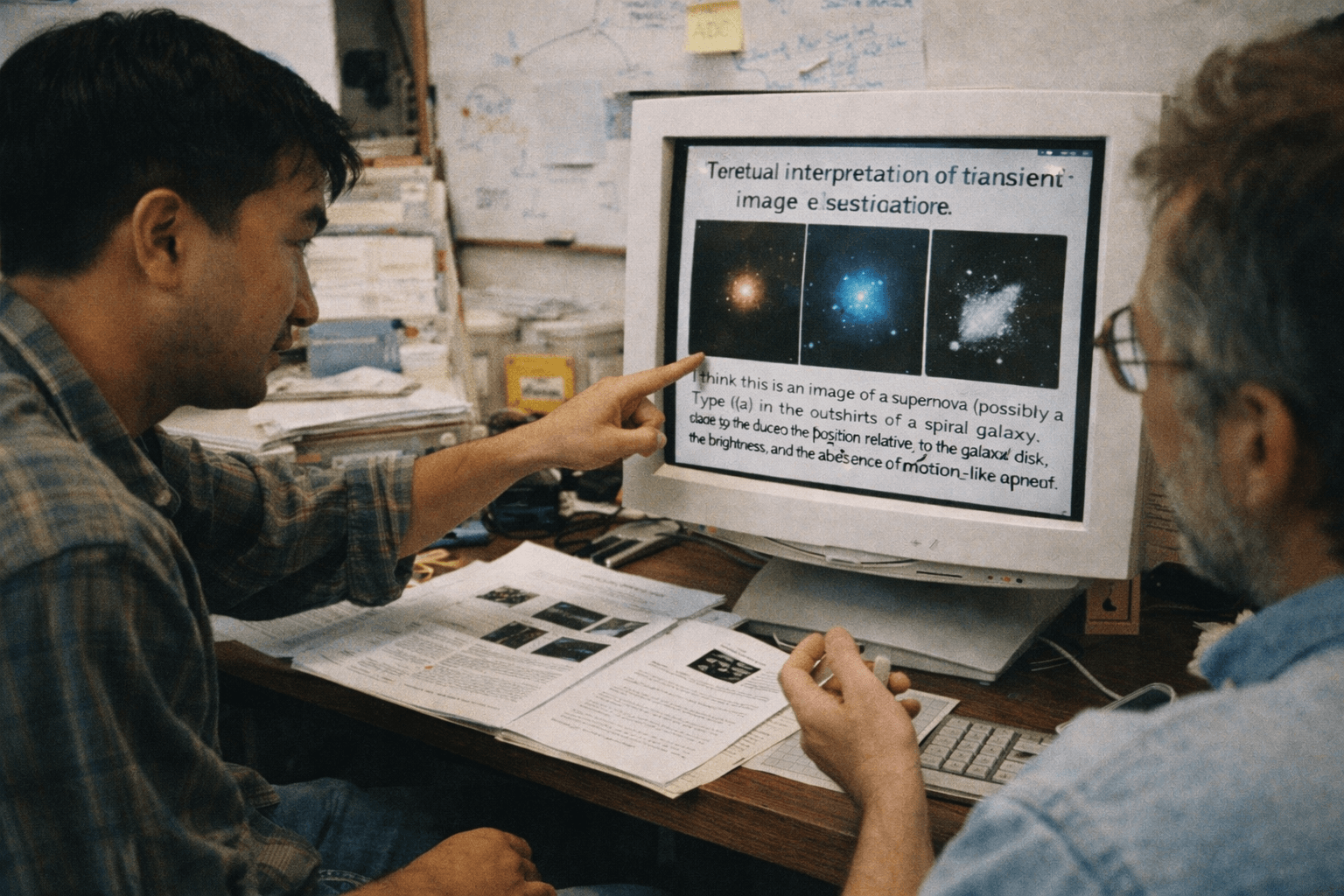
Textual interpretation of transient image classifications from large language models
What is the setup?
A lot of scientific ML still looks like: label a mountain of data, build a custom model, retrain when the universe changes its mind. This paper tries a different trick: use a foundation model like Gemini as a low-data classifier.
What they did (yes, really)
They gave Gemini 15 labelled examples plus a short instruction set, then asked it to classify astronomical images. No fine-tuning. No custom architecture. No “we trained for three weeks on a GPU that costs more than my car.”
What happened
Across three datasets, they report around 93% accuracy, which is in the same ballpark as a traditional CNN pipeline.
Why it is interesting (beyond the number)
The model also gives a plain-English explanation for each prediction. That means you can audit what it thinks it is doing, instead of staring at a probability score like it is going to confess its sins.
The real question
Does this “prompted reasoning + tiny labelled set” approach generalise, or do we end up with hybrid systems where smaller models do the heavy lifting and LLMs handle orchestration and explanation? Either way, it is a strong signal that “LLMs in science” is graduating from vibes to workflows.
A protocol for connecting agents to scientific tools, datasets, models, and even lab instruments behind a unified interface.
Best for: orchestrating end-to-end experiments from planning to execution with fewer glue scripts held together by hope. https://github.com/InternScience/scp
DeepFabric
Generate structured synthetic datasets using LLMs.
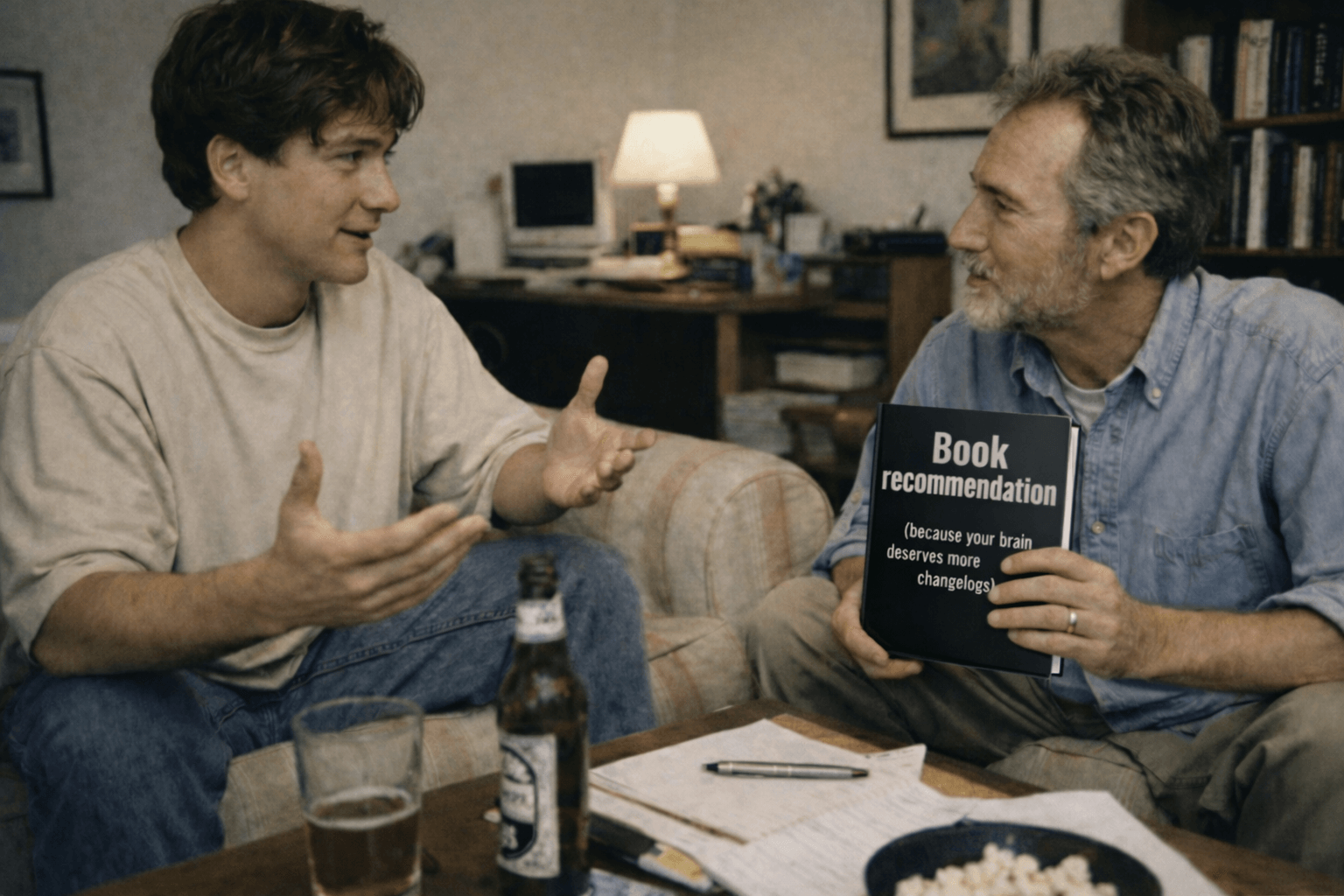
Book recommendation (because your brain deserves more than changelogs)
Life 3.0 (Max Tegmark)
This is not “AI will fold your laundry” optimism. It is “what happens if we build systems that can outthink us, redesign themselves, and change the rules” seriousness, explained in a way that does not feel like a policy briefing.
If you build products, invest, or lead teams, this book forces one uncomfortable but useful thought: even if your roadmap is boring, the underlying game board might not be.
Geeky thought of the day
Have LLMs passed the Turing Test, or are we just extremely easy to impress?
LLMs can convincingly impersonate a human in short bursts, especially when the conversation stays on rails. But pattern prediction is not the same thing as understanding, and long, messy conversations still expose cracks.
Still, the wild part is not whether they are “human.” It is that they are already changing work, creativity, support, coding, research, and how people make decisions. The bar is not “is it conscious?” The bar is “is it useful, safe, and correctly governed for this job?”
Housekeeping (so we stay honest)
This is general information, not legal advice. If you ship user-facing AI, be transparent about where AI is used, what it cannot do, and where humans stay in the loop.
It discusses a paper on "Textual interpretation of transient image classifications," showing how Gemini can classify astronomical images with high accuracy using just 15 labelled examples and text instructions.
Which AI tools are worth checking out this week?
We highlight MiniMax M2.1 for coding agents, SCP for scientific experimentation contexts, DeepFabric for synthetic data generation, and NVIDIA Nemotron 3 for scalable reasoning.
What book is recommended in this issue?
Max Tegmark’s "Life 3.0", which explores the future impact of superintelligence on society, work, and humanity itself.
Do I need to change my privacy notices for new AI features?
If you introduce new AI features that process personal or sensitive information, update your privacy notice and consent flows. Reference the OAIC APPs and include a short, plain-English description of what the model does, inputs needed, retention, and human oversight.
What is the safest way to start a pilot?
Begin with low-risk internal content (policies, FAQs), apply rate limits, log prompts/outputs, and perform red-team style testing. Use feature flags and role-based access. Run a DPIA/PIA if personal data is involved.
How should teams validate model performance?
Create a small, labeled evaluation set that mirrors your domain. Track accuracy, hallucination rate, latency, and cost per request. Re-test after any model switch or prompt change, and record changes in a decision log.
Are there grants or programs in Australia for AI experiments?
Check current state-based innovation vouchers, CSIRO Kick-Start, and university accelerator programs. Funding cycles shift, so confirm eligibility windows and co-contribution rules before committing spend.