How to foster community engagement
Key facts: How to foster community engagement
Define what useful participation looks like, make the first contribution manageable and use member feedback to improve the next activity.
How do you encourage participation in a community?
Make actions low-friction, recognise contributions, and publish a quick “you said, we did” update.
How do you measure community engagement?
Track active members, diversity of voices, response times, retention, and decisions influenced.
What makes engagement inclusive?
Use multiple channels, plain English, accessible formats, and recognise lived-experience input.

How to foster community engagement — In Australia, communities engage when the purpose is clear, participation is accessible, and updates show how input changed the outcome. This guide distils inclusive practice, practical methods, and the metrics that matter so your community can contribute with confidence.
Who is this guide for?
AI practitioners & builders
For engineers and data folks running open, safe community spaces.
Students & career switchers
Practical ways to contribute, learn, and be heard without overwhelm.
Designers & community leads
Facilitate inclusive, feedback‑rich sessions and report back well.
Set the purpose and scope before inviting people
Engagement runs on clarity. State the decision or problem, what is “on the table,” who can influence it, and when. Define a small pilot window (e.g., two weeks) and the exact artefacts you will produce (summary, draft recommendations, implementation plan).
Make it inclusive: reach, access, and representation

Borrow from inclusive engagement guidance used by Australian public bodies: meet people in multiple channels, offer accessible formats, and recognise lived experience. Proactively invite under‑represented voices and ensure culturally safe participation.
- Offer synchronous and asynchronous options (workshops, forums, email, surveys).
- Use plain English and alt text; provide captions or transcripts for recordings.
- Compensate or formally recognise contributors where appropriate.
Choose fit‑for‑purpose engagement methods

Match the method to the outcome you need. Blend depth (co‑design) with reach (asynchronous prompts) and trust‑building (community ambassadors).
Co‑design workshops (depth)
Small, facilitated sessions to unpack needs, sketch options, and test trade‑offs. Publish a short read‑out within 48 hours.
Asynchronous threads and micro‑prompts (reach)
Use structured prompts in forums or chat to gather ideas over days, enabling people across time zones or with caring responsibilities to participate.
Community ambassadors (trust)
Equip respected community members to invite peers, summarise local views, and surface barriers. Recognise their contribution publicly.
- State the decision, scope, and timeline up front.
- Provide 2–3 participation paths (workshop, async, ambassador).
- Publish a “you said, we did” within two weeks.
Run a two‑week pilot
- 1Define purpose, scope, and success measures
- 2Map stakeholders and inclusion needs
- 3Pick 2–3 methods matched to your audience
- 4Launch, facilitate, and summarise themes
- 5Close the loop: publish what changed and why
Close the loop and show impact
After each cycle, map themes to actions. Say what changed, what did not, and the rationale. Keep updates short and link to deeper artefacts. This creates accountability and builds momentum.
Measure what matters and iterate
Track both participation and quality. Combine quantitative and qualitative signals to see whether engagement is broad, inclusive, and useful.
- Participation: active members, post‑to‑reply ratio, response times, retention month‑on‑month.
- Diversity: representation across demographics, roles, locations.
- Outcomes: decisions influenced by community input; policy or product changes shipped.
- Trust: short pulse surveys and interviews to capture confidence over time.
Want a broader view on peer networks and collaboration? See our Community & Collaboration overview.
More from the MLAI article library
Browse practical guides and explainers on AI, startups, and careers, written by the MLAI community for Australian startups and teams.
Browse all articlesBring it together: pilot, learn, repeat
Start small, include widely, and report back quickly. Repeat this two‑week rhythm and you’ll build trust, surface better options, and make decisions the community can stand behind.
Sources & further reading
[1]How to engage with community — Better Practice Guide: Inclusive engagement
State Government of Victoria • Official guidance on planning and running inclusive community engagement in Victoria.
Guide[2]Community Engagement 101: Ultimate Beginner's Guide
Visible Network Labs • Overview of engagement strategies and network mapping concepts for practitioners.
Analysis[3]IAP2 Public Participation Spectrum
Engagement Institute (formerly IAP2 Australasia) • Widely used framework describing levels of participation from Inform to Empower.
Guide
Disclaimer: This article provides general information and is not legal or technical advice. For official guidelines on the safe and responsible use of AI, please refer to the Australian Government’s Guidance for AI Adoption →
Need help with How to foster community engagement?
Join the MLAI community to collaborate with fellow AI practitioners in Australia.
Get recommendationsYou can filter by topic, format (online/in-person), and experience level.
About the Author
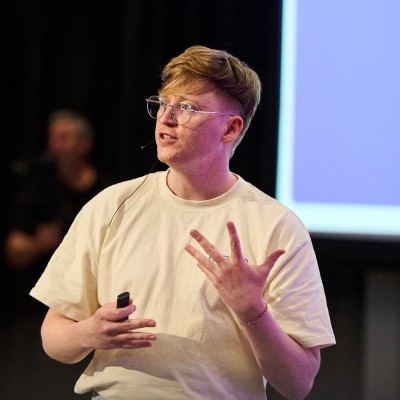
Dr Sam Donegan
Medical Doctor, AI Startup Founder & Lead Editor
Sam leads the MLAI editorial team, combining deep research in machine learning with practical guidance for Australian teams adopting AI responsibly.
Frequently Asked Questions
What is community engagement?
How do I increase participation in a new community?
Which engagement methods work best?
How do we make engagement inclusive in Australia?
How often should we report back to the community?
What metrics matter for engagement quality?
Disclaimer: This article provides general information and is not legal or technical advice. For official guidelines on the safe and responsible use of AI, please refer to the Australian Government’s Guidance for AI Adoption →

Join our upcoming events
Connect with the AI & ML community at our next gatherings.