What are startups? — A startup is a young organisation searching for a repeatable, scalable business model under high uncertainty. In Australia in 2026, that usually means working quickly to validate a real problem, proving demand with early customers, and building a tech‑enabled product that can grow beyond a single location or team.
What is a startup? Definition and common traits
A startup combines three elements: uncertainty (you do not yet know the exact product or go‑to‑market), scalability (the model should work in many places with similar unit economics), and speed of learning (rapid cycles to discover what works before capital and energy run out). Many Australian startups are software‑led, but hardware, biotech, climate tech and services can also be “startup‑like” when they pursue scalable models.
- Goal: discover a repeatable, scalable model (not just deliver a single project).
- Method: rapid experiments, customer discovery, and measurable learning.
- Result: evidence of demand (retention, revenue, or usage) that sustains growth.
Download the What are startups? checklist
Access a structured template to apply the steps in this guide.
💡Tip: Write the problem in one sentence
If you cannot explain the user’s pain, who feels it, and how often it occurs in one sentence, you are not ready to build. Start with 10–15 short interviews and look for repeated phrases.
Startup vs small business: what’s the difference?
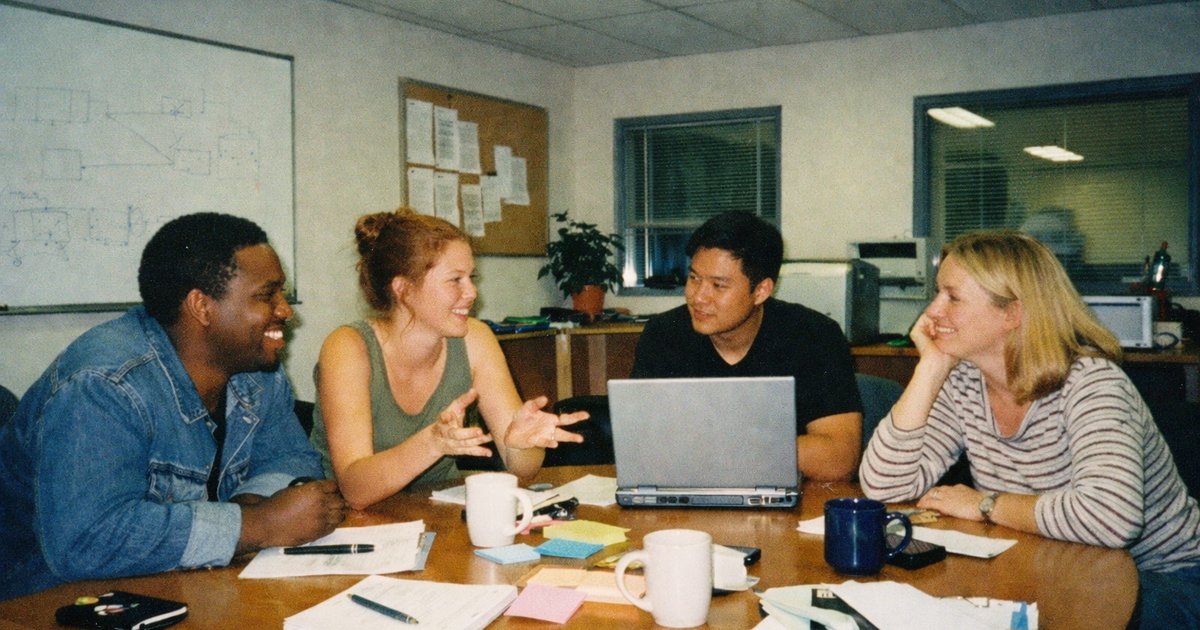
Small businesses run proven models for a known local market and prioritise stable profit. Startups are designed to search, change quickly, and scale beyond the founders. Both are valuable; they just optimise for different outcomes.
How they differ in practice
- Business model: discovery and iteration vs. execution of a known model.
- Funding: external equity and fast reinvestment vs. owner funding or bank finance.
- Team: flexible roles and rapid hiring vs. defined roles and steady headcount.
- Risk/return: higher variance with potential for outsized impact vs. lower variance and local resilience.
How startups are funded (pre‑seed to Series B)

Many Australian startups begin with founders’ savings and customer revenue, then raise external capital when experiments show traction. Typical stages (naming varies):
- Pre‑seed: Idea and problem validation, tiny prototype or landing page; often angels or small funds.
- Seed: Early product in market with signs of retention or revenue; angels/seed funds/accelerators.
- Series A/B: Clear product–market fit and repeatable growth; institutional VCs to scale.
In Australia (as at 2026), many teams also use the federal R&D Tax Incentive to offset eligible R&D costs and may apply for state programs (e.g., LaunchVic). Always verify current rules on official sites and seek independent advice.
Lifecycle: from problem–solution fit to scale
Problem–solution fit
You have evidence that a specific group consistently experiences a painful problem and confirms your proposed solution would help (e.g., pre‑orders, letters of intent, or paid pilots).
Product–market fit
Users return without heavy prompting and refer others. Signals include strong retention, high NPS from core users, and improving unit economics.
Repeatable growth
A channel (or two) predictably converts prospects to loyal users at an acceptable customer acquisition cost (CAC) and payback period.
How startups make money: models and metrics that matter
Common models include subscriptions (SaaS), usage‑based pricing, marketplace take rates, enterprise contracts, and ad‑supported freemium. What matters is not the label but whether unit economics improve with scale.
- Retention and engagement: Do users keep using it each week/month?
- Gross margin: Does margin improve as you grow?
- CAC and payback: How long to recover acquisition costs from gross profit?
- LTV vs CAC: Is lifetime value meaningfully higher than CAC?
Practical steps
- 1Run 10 short interviews with your target users this week
- 2Publish a landing page with a clear value proposition and email capture
- 3Ship a small prototype (or concierge version) and charge at least one customer
Expert insight
“The job of an early‑stage startup is to learn faster than the runway runs out. Prioritise the smallest experiments that create the most learning.”
Set‑up basics in Australia (as at 2026)
This is general information only. Always check official guidance and seek professional advice.
- Structure: Sole trader vs Pty Ltd company. Many funded startups use a company for equity and ESOPs.
- Registrations: ABN via the Australian Business Register; if incorporating, ACN and company setup via ASIC.
- Tax & payroll: Consider GST, PAYG, superannuation obligations, and bookkeeping from day one.
- IP & privacy: Protect key IP where sensible; follow Australian privacy law and sector‑specific rules.
- Grants & incentives: Review the R&D Tax Incentive and relevant state programs on official sites.
Helpful starting points: business.gov.au, asic.gov.au, abr.gov.au, and your state’s startup agency (e.g., LaunchVic, Advance Queensland).
How long is a company a “startup”, and common risks
Most teams stop calling themselves a startup once they achieve product–market fit and operate a repeatable growth engine. That often happens within 3–5 years, but timelines vary with markets and capital.
- Top risks: building a solution without a painful problem; running out of capital; regulatory missteps; co‑founder misalignment; weak retention.
- Mitigations: talk to users weekly, instrument the product, keep burn low, document co‑founder agreements with vesting, and set explicit milestones for each raise.
Turn curiosity into a small test
If you are unsure whether the startup path fits, run a one‑week test: speak with real users, draft a value proposition, and measure sign‑ups or pre‑orders. Treat the result as data for your next decision, not a verdict on you.
Your Next Steps
- 1Download the checklist mentioned above.
- 2Draft your initial goals based on the template.
- 3Discuss with your team or mentor.
Free MLAI Template Resource
Download our comprehensive template and checklist to structure your approach systematically. Created by the MLAI community for Australian startups and teams.
Access free templatesNeed help with What are startups??
Join the MLAI community to collaborate with fellow AI practitioners in Australia.
Get recommendationsMLAI is a not‑for‑profit community based in Australia.