Why Australian Startups Need Stronger AI Communities
Key facts: Why Australian Startups Need Stronger AI Communities
Australian startups grow faster when AI communities connect talent, validation, feedback and practical pathways from tools to trusted products.
What are the top 10 startups?
This article does not rank the top 10 startups. It cites LinkedIn’s 2025 Top Startups list as one signal of visible startup activity, including AI-linked company Relevance AI.
What are the top startups in Aus?
Top startup signals in Australia include companies attracting talent, capital and market attention. The article references LinkedIn’s startup list and a reported week where 24 Australian tech companies raised $91 million.
What business can I start with $100K in Australia?
The article does not recommend a specific business to start with $100K. It explains that startup teams should use AI communities to test ideas, find capability gaps and validate market demand.
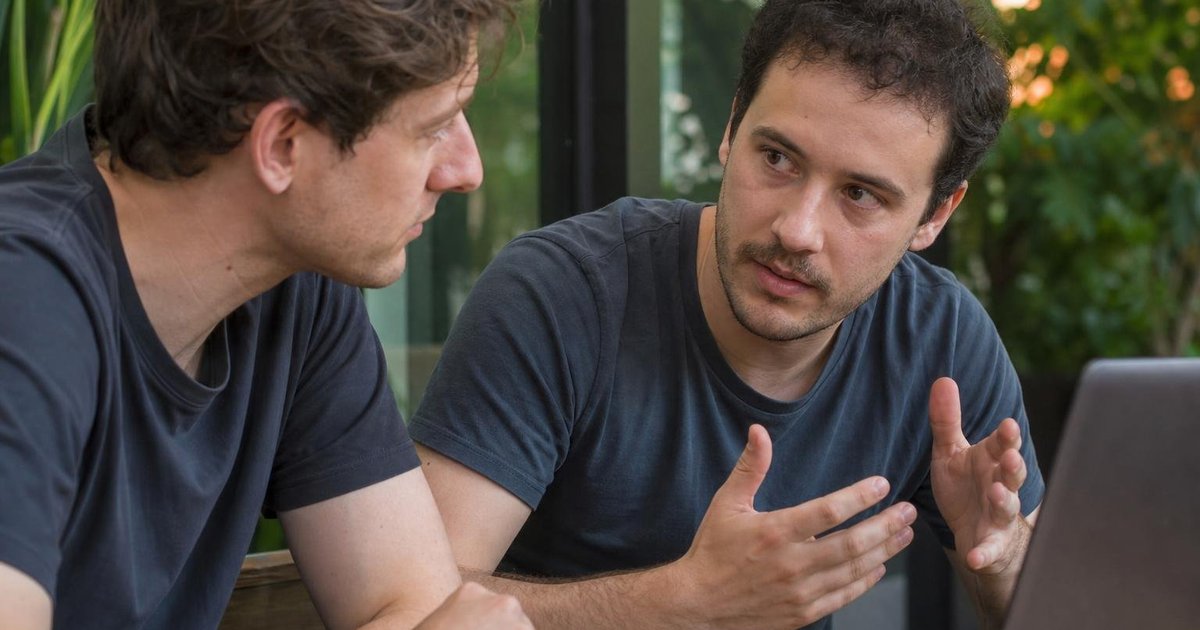
Why Australian Startups Need Stronger AI Communities — Australian startups need stronger AI communities because access to the tools is no longer the main barrier. AI is now something many people can explore with an internet connection and curiosity, not only something built inside the largest global technology companies.
Australia’s AI ecosystem is growing across businesses, research and jobs, and national reporting also points to gaps in the system. Funding signals show momentum too, with Australian tech companies raising fresh capital and startup lists highlighting teams that invest in talent and long-term careers. Communities help founders and builders compare notes, meet collaborators, test ideas and learn faster than they could alone.
Australian startups have momentum, but access is uneven
Australian startups are not short on signs of activity. SmartCompany reported one week in which 24 Australian tech companies collectively raised $91 million, including Startmate cohort companies and larger raises such as Fluent Commerce raising $46 million to scale AI-powered retail order management tools. LinkedIn’s 2025 Top Startups list also points to visible AI-linked company building, including Relevance AI among the startups highlighted for talent and career growth.
That momentum matters, but it is not the same as a mature, evenly supported ecosystem. The National AI Centre describes Australia’s AI ecosystem as growing across businesses, research and jobs, while also noting gaps across the size, structure and specialisations of the workforce, companies and research activity. Stone & Chalk makes a similar opportunity case: AI tools are now easier to explore, and Australia can be more than a follower, but founders still need practical pathways from curiosity to customers.
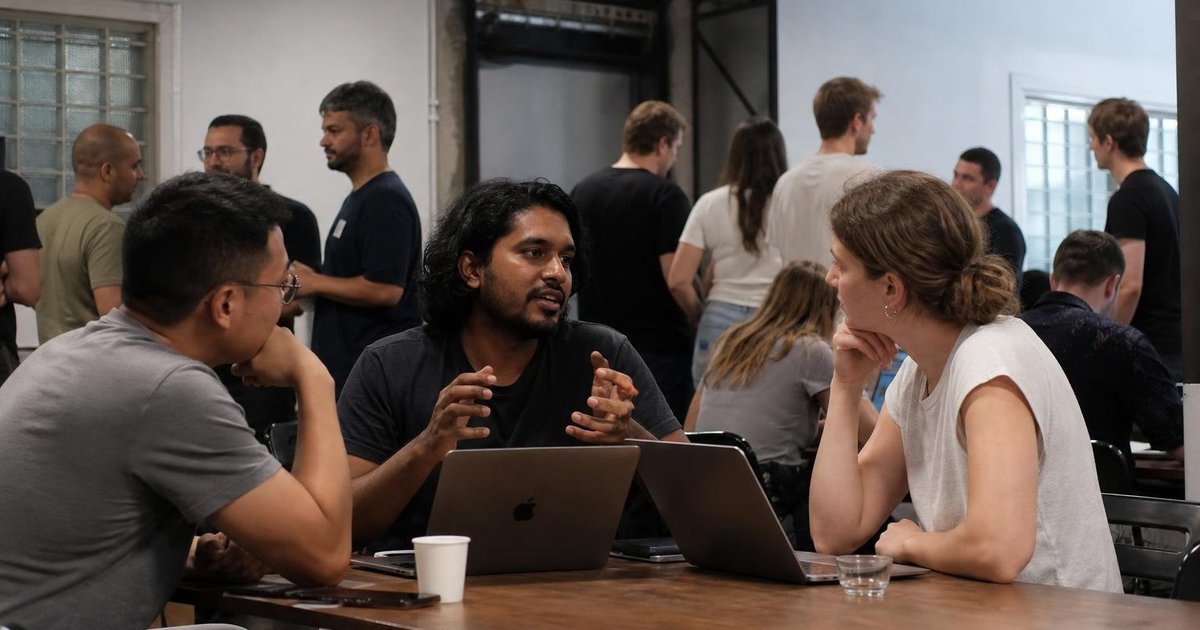
Community turns AI access into better execution
AI has lowered the barrier to entry for Australian startups. As Stone & Chalk notes, AI is no longer only for large technology companies. Anyone with an internet connection and curiosity can start exploring it.
A useful AI community gives founders, builders, researchers and domain experts a place to test assumptions before they become product decisions. The National AI Centre frames Australia’s AI ecosystem as spanning businesses, research, jobs and capability gaps. Communities help connect those parts so startups are not learning in isolation.

From tool access to trust loops
The community can then help them ask whether the problem is real, whether the data is fit for purpose, whether the output can be checked, and whether customers would trust it in practice.
It helps startups move from experimentation to products that are useful, reliable and market-aware. For Australian startups, the opportunity is not just to use AI earlier. It is to build with stronger judgment, clearer evidence and closer links to the people who will use the product.
Where stronger AI communities help most
AI founders
Bring a clear product, data or market question so community feedback can sharpen validation before decisions become fixed.
Technical builders
Use the community to find real workflows, domain constraints and customer problems that need more than tool experimentation.
Researchers and domain experts
Connect research knowledge and practical workflow insight with founders who need stronger evidence and better product judgement.
Investors and ecosystem supporters
Look for credible signals of capability, sharper validation and useful weak ties between teams, customers and support pathways.
The best communities connect talent, validation and capital
Strong communities help Australian startups move faster because they connect the people behind the work. LinkedIn’s 2025 Top Startups framing puts talent at the centre of startup strength, highlighting companies that invest in people and help them build long-term careers. That matters in AI because good ideas need technical builders, researchers, operators and domain experts to meet early, not after the product is already fixed.
The National AI Centre describes Australia’s AI ecosystem as growing across businesses, research and jobs. That growth creates opportunity, but it also makes the ecosystem harder to navigate alone. A useful community gives founders more than visibility. It creates weak ties that can lead to sharper validation, credible introductions and support pathways, including cohorts and funding networks like Startmate, which appeared alongside 24 Australian tech companies raising $91 million in one reported week.
- Builders can meet founders who need product, data and engineering help.
- Domain experts can test whether an AI idea fits real workflows.
- Investors and customers can see early signals before a startup is widely known.
How startup teams can use AI communities deliberately
Australian startups get more value from AI communities when they start with a clear gap, not a vague networking goal. That gap might be product discovery, model evaluation, access to a domain expert, hiring, responsible AI practice, or a sharper view of the market. Australia’s AI ecosystem spans businesses, research, jobs and specialist activity, so a founder should treat community time as a way to find the next useful signal inside that wider system.
The practical move is to bring something specific into the room. Conversations then become inputs for action: a clearer product choice, a possible pilot, a mentor introduction, a research link, or a hiring lead. This fits the reality of Australian startups, where talent, product learning and market access all matter to long-term growth.

Four community habits that compound
Fourth, write down what changed after the conversation and decide whether it affects the product, team, pilot plan, or go-to-market path.
They also match the strengths of Australia’s AI environment: a growing ecosystem, a market that can test new products, and startup teams that need to keep building capability while they grow.
Use community deliberately
- 1Map the startup’s AI capability gap.
- 2Bring one concrete problem to the community.
- 3Turn feedback into a pilot, hire, mentor introduction or customer conversation.
- 4Record what changed and share useful learning back into the next loop.
Build the ecosystem around the company
Australian startups do not grow in isolation. The National AI Centre describes Australia’s AI ecosystem as a mix of businesses, research, jobs and workforce activity across the country. For founders, that means community is not a side activity. It can be part of how a company finds talent, tests ideas, builds trust and learns faster.
Australia has a chance to lead in AI when founders, builders, researchers and supporters work across the ecosystem.
- Choose a community that matches your stage, sector or technical problem.
Free worksheet
AI Community Planning Worksheet
Use this worksheet to define your community gap, choose the right AI community, prepare a specific ask, and turn conversations into useful next steps.
Experiment Card
Preview
Decision Log
Preview
Sources & further reading
[1]The time for Australian AI is now | Stone & Chalk
stoneandchalk.com.au • stoneandchalk.com.au
Guide- Guide
[3]Startup Funding in Australia: A Fullstack Guide - Fullstack
fullstack.com.au • fullstack.com.au
Guide
Show all 11 references (8 more)Show less
[4]How to Structure a Startup in Australia: A Practical Guide for Founders | Enosta
enosta.com • enosta.com
Guide[5]Thriving in a competitive market: Tips for Australian startups
awaydigitalteams.com • awaydigitalteams.com
Guide[6]24 Aussie startups that raised $91 million this week
smartcompany.com.au • smartcompany.com.au
Guide[7]Top Startups to work for in Australia (2025) | LinkedIn
linkedin.com • linkedin.com
Guide[8]7 Legal Strategies That Give Australian Startups | Sprintlaw Australia
sprintlaw.com.au • sprintlaw.com.au
Guide[9]10 Tips: Bring Your Startup to Australia: 8 - Setting Up In Australia
legalvision.com.au • legalvision.com.au
Guide[10]Guide to starting a business | business.gov.au
business.gov.au • business.gov.au
Guide[11]Australian Startups: Key Advice for Explosive Growth in 2025 - Wholesale Investor
wholesaleinvestor.com • wholesaleinvestor.com
Guide
Disclaimer: This article provides general information and is not legal or technical advice. For official guidelines on the safe and responsible use of AI, please refer to the Australian Government’s Guidance for AI Adoption →
Build stronger AI learning loops
Use community time to bring a real problem, compare signals and turn feedback into clearer product, hiring or validation decisions.
Explore AI community articlesDr Sam Donegan
Founder
Dr Sam Donegan is the founder of MLAI and writes about practical AI education, communities and responsible adoption for Australian builders.
Frequently Asked Questions
What counts as a strong AI community for startups?
Can non-technical founders benefit from AI communities?
How can AI communities support funding readiness?
How should Australian startups choose the right AI community?
Disclaimer: This article provides general information and is not legal or technical advice. For official guidelines on the safe and responsible use of AI, please refer to the Australian Government’s Guidance for AI Adoption →

Join our upcoming events
Connect with the AI & ML community at our next gatherings.